Workplace Challenges

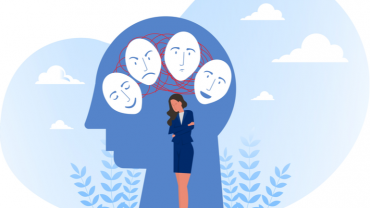
Emotions key to success

Having a best friend in the workplace, as well as a social life unassociated with the job, motivates individuals to reach greater horizons in their careers.


[ 2007-08-29 ]


(Comstock)

“We find that social support is very important at work to reduce stress,” says Dr. Steven Stein, president and CEO of Multi-Health Systems (MHS). “People are happier and more productive if they have a best friend at work. If you check in with a best friend there’s feedback from them. It also involves developing a life outside of work.”

According to Stein, who is also an expert on workplace success and Emotional Intelligence (EI), being aware of and monitoring your feelings, as well as the feelings of others, can be more important in the workplace than your intelligence quotient (IQ).

He said that while IQ can get you hired, EI is more significant to achieving success.

NEGATIVE EFFECTS OF STRESS


In late May, Leger Marketing conducted an online survey to provide insight on how stress can limit EI and workplace success. Of those surveyed, 22 per cent of Canadians say stress has created career roadblocks for promotion or advancement in their organization or company.


So eliminate the stress and you eliminate the problem, right? Wrong.

If we lived in a perfect world that would be an ideal solution, but stress will always be part of the workplace. The key is to manage the good and the bad.

Good stress, for example, is when one feels excited about the job, and there are projects coming ahead that you are looking forward to. Bad stress, for instance, may be when anger or anxiety start to creep up. Success is achieved by managing the bad and involving oneself in more of the good.

WORKPLACE STRESS


So how do you achieve this in a hectic workplace environment?

“There are a number of ways to do that,” Stein says. “First of all, one of the big problems is overwork. Identify what’s really important that you do and some of the stuff that’s not so important. In terms of the good stress, one of the things you want to do is make sure you’re the right fit for the type of job that you have.

“Reading more about (EI) and understanding what it’s all about is another way (to reduce stress). It really involves getting out and learning how to feel better.”

Shirin Khamisa is the head careers coach at Careers by Design. A good way for someone to reduce stress at work is to identify weaknesses and focus on improving them to produce workplace success and Khamisa says that not doing this can downplay a career.

“There is a danger that after many years of not spending time on yourself to improve – you either feel that weakness is a ‘part’ of you and can’t be changed or you lose motivation simply because you have not been successful at the act of changing and inevitably focus on that.”

SOCIAL LIFE


According to Khamisa, a person can look for an objective point of view about their work by being in touch with their social life.

“An important component of leading a balanced life is to cultivate and enjoy positive and meaningful relationships,” says Khamisa. “Spending time with others and sharing both good and bad career experiences can be very helpful in reducing career stress. Friends outside of work can provide an unbiased, different perspective which can help tremendously.”

TRAINING YOUR EI


Improving your EI isn’t something that can be done in a classroom, it is best learned hands on. Khamisa also has a few suggestions on how to go about it.

“Firstly, it’s important to know yourself and particularly your emotions and how you tend to react to situations,” she says. “This can take time but, for example, I provide clients exercises specifically designed to foster self-awareness. Improving communications skills is another aspect of EI that can pay handsome rewards. In particular, non-verbal communication is vital – body language, for example, learning to gauge reactions of others impartially and not being swayed instead by your own reaction to them.”

Though MHS provides EI training, there are not a lot of other programs available in Canada. Stein said this needs to change, as it can dramatically improve the way individuals identify their strengths and weaknesses.

“We help them by measuring their strengths and weaknesses so that they are considered to be leaders,” he says. “So once they know what their strengths are, then they learn the areas they got to develop and we focus on those.”

MEASURING EI


These are the 15 factors that influence an individual’s success and measure EI

Intra-Personal: the ability to be aware of, manage and express emotions
It includes:

  • Emotional Self-Awareness
  • Assertiveness
  • Self-Regard
  • Self-Actualization
  • Independence

  • Inter-Personal: the ability to initiate and maintain relationships with other
    It includes:

  • Empathy
  • Interpersonal Relationships
  • Social Responsibility

  • Stress Management: the ability to tolerate stress and control impulses
    It includes:

  • Stress Tolerance
  • Impulse Control

  • Adaptability: the ability to be flexible, solve problems and be realistic
    It includes:

  • Problem-Solving
  • Reality Testing
  • Flexibility

  • General Mood: one’s happiness and optimism
    It includes:

  • Happiness
  • Optimism

  • In order to allow people to investigate their EI, MHS published a test called the Bar-On EQ-i (Emotional Quotient inventory), which measures EI in the same way IQ measures cognitive intelligence. It is also the world’s first scientific way of measuring EI.

    -----


    Nuno Soares is a freelance writer and journalism student at Centennial College.


    Doing my part.coop Contest
     
     
    Your Opinion Matters

    Do you have you a bad boss?